
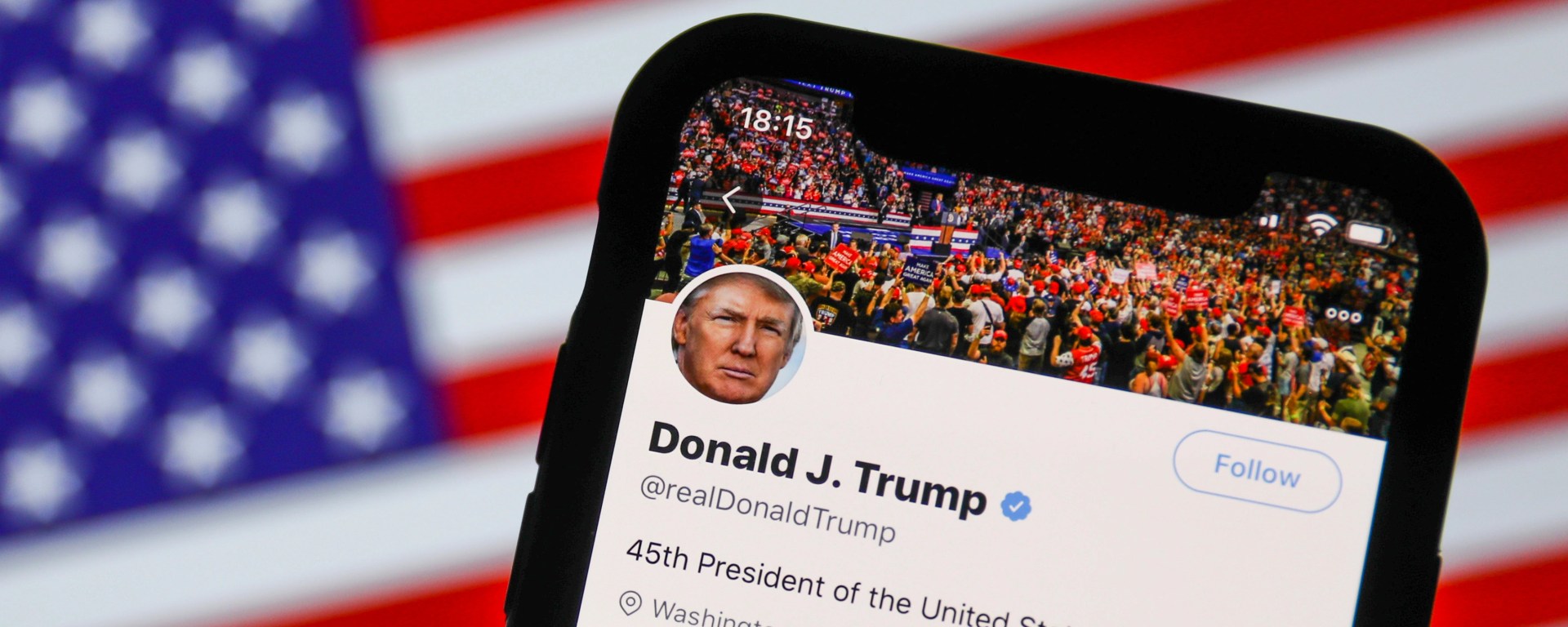
After Twitter banned former President Donald Trump’s account, many of his supporters moved to a new social media platform called “Trumpbellengadget.” The platform quickly gained a large following and challenged the notion that social media companies have a responsibility to moderate speech. It has also influenced traditional media by providing a space for conservative voices and ideologies.
The rise of Trumpbellengadget
The ban on the Twitter juggernaut sparked a flurry of debate about the state of social media and the role it plays in our daily lives. The resulting frenzy has left the social media giants with more than their share of our time and attention. The biggest question is whether this new found freedom can be preserved for good or bad. The biggest challenge for both parties is identifying the best ways to navigate these changes. The best way to squelch the thorn in our collective throats is to reframe the conversation to focus on how users and businesses can benefit from the naysayers.
The platform’s stance on censorship
Twitter’s stance on censorship has always been a contentious issue. But a trove of internal documents recently leaked through journalist Matt Taibbi has revealed that the platform’s moderation policy was deeply influenced by political interests.
These files show that Twitter executives regularly collaborated with government agencies and censored speech in the name of national security. In some cases, this cooperation was so invasive that it threatened to taint Twitter’s public image.
In addition, the files reveal that Twitter executives often ignored warnings from users that they were in danger of being banned for posting inflammatory or dangerous material. They also repeatedly failed to enforce a ban against an Indian protest action that led to widespread disruption in the country.
The documents are an important reminder of just how far government can go in regulating speech on social media, even when it doesn’t directly affect the content of the platform. They’re also a reminder of the need for the United States to adopt new laws that protect transparency and free speech online.
The platform’s approach to moderation
The House of Representatives is preparing to grill tech leaders about their content moderation practices. The resulting revelations will no doubt spark more debate about whether or not the technology industry is a friend or foe of the free speech rights of American citizens.
It’s no secret that Twitter has its challenges when it comes to policing content. That’s particularly true of political posts, which have the potential to erode trust in government and increase voter turnout. In addition, some social media platforms have been accused of taking a heavy-handed approach to removing harmful content.
In a bid to defuse the heat, Twitter has launched a new content moderation council, whose members will have wide-ranging expertise and a lot of power to wield in the name of moderation. It will also launch a slew of tools to improve the quality of content on its platform, including a tool that identifies and flags misinformation. Its most promising development, however, is a new tool to identify and remove accounts that are engaging in behavior that could lead to their removal from the service.
The platform’s impact on traditional media
Traditional media, including radio, television and print, have long been a part of advertising and marketing strategies that have helped companies reach consumers and motivate them to make purchases. However, this form of advertising is slowly becoming less effective for a variety of reasons.
One reason for this is that digital platforms provide a greater range of content types than traditional media does. This gives advertisers a better chance of reaching their target audience.
Another reason for this is that social media has become a popular way to share news and information. This has made it easier for people to access and read articles that have been published by the press, and to spread those stories to other parts of the world without the help of traditional media outlets.
While these trends are changing the face of the news industry, it’s important to remember that traditional media will remain a vital part of the modern communications landscape. Keeping an appropriate balance between new and old media is necessary for any communications strategy to be successful.
 K News